His Ass is Not Out of Ice: What Frozone Missed in High School Chemistry
January 2025. Originally published and printed in The Fool Edition 7 (Spring 2025).
Content Warning: Contains discussion of historical racism and fire.
When I first watched Disney Pixar’s The Incredibles in my sophomore year of college, I went in blind. I recalled tiny bits of the film, perhaps from seeing it very early in my childhood, but I had no real idea of the plot. Overall, it didn’t disappoint - the premise was interesting, the characters were engaging, and the humor didn’t feel too childish to be enjoyable. However, I never expected the scene that would stick with me the most:
(Frozone and Mr. Incredible are rescuing civilians from a burning building. Frozone attempts to freeze the flames with a blast of ice, but can only manage a few weak snowflakes.)
MR. INCREDIBLE: Can’t you put this out?
FROZONE: I can’t lay down a layer thick enough! It’s evaporating too fast!
MR. INCREDIBLE: Now what’s that mean?
FROZONE: It means it’s hot. And I’m dehydrated, Bob!
MR. INCREDIBLE: You’re out of ice? You can’t run out of ice, I thought you could use the water in the air!
FROZONE: There is no water in this air!1
While setting up for an exciting moment where Frozone gets to show off both his wit and his powers, this scene’s potential for characterization wasn’t what grabbed my attention. What held it in my mind was something much simpler: Frozone is wrong. There is water in the air. Frozone may be out of ice, but why?
Like the grand majority of other American high schoolers, I took chemistry in my sophomore year. In that class, I was taught the basic structures of various types of chemical reactions - including, notably, that of combustion reactions.
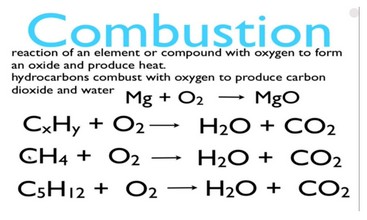 Simply put, a combustion reaction refers to any reaction where a chemical, either an element or a compound, reacts with oxygen to form some kind of oxide. The most common form of combustion reaction consists of a hydrocarbon (that is, one of a number of chemical compounds consisting of varying amounts of a. hydrogen, and b. carbon) reacting with oxygen to produce carbon dioxide and water vapor.2 This common form of combustion is fire - the kind you see in a fireplace, on a gas stove, or, in this case - a burning building. In other words, fire produces water.3
Frozone certainly has a water source, but let’s give him the benefit of the doubt. It seems more than fair to say that he would need more water than usual in an environment that is hot enough to not only melt ice, but to fully evaporate it in seconds. Just how much water vapor is in the air of a burning building?
According to a study by the University of Illinois and the Illinois Fire Service Institute, the humidity could have more than doubled from the ambient humidity pre-burn. The study measured at multiple heights, with different building materials fueling the fire, and tracked humidity levels throughout the duration of each burn.
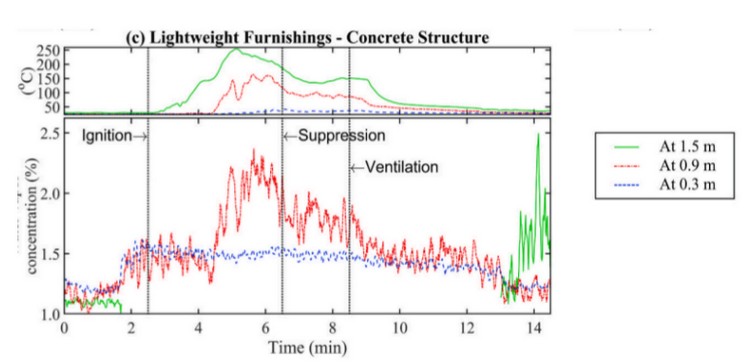 I specifically drew from the measurements 0.9m (~2.95ft) above the ground, since this would fall the closest to Frozone’s hands.4 The outside view in the film shows that the burning building is built of bricks, with internal structures largely made out of wood. Given this, I pulled from the Light Furnishings - Concrete chart for the closest material comparison. In this burn, the room began at roughly 1% humidity, rising to ~1.5% when the fire was first ignited, and rising to nearly 2.5% at its peak, around 6 minutes.5 A large support beam nearly falls on Frozone and Mr. Incredible mere seconds before their exchange, so it seems safe to assume that the fire is at its peak, and we may use the 2.5% measurement. This may not seem like a lot of water, but it is two and a half times the ambient humidity without the fire - which Frozone would have been able to work with, no problem.
If Frozone has all of this extra humidity to draw on, then why can’t he make any more ice? There are only two remaining options: either a), he’s lying for some reason, or b) he’s just not strong enough in the face of this much fire. He could potentially know and be lying to save face, but there’s no way to know this for sure. It would make no sense for him to lie out of spite, either - he may have been hesitant to go superheroing undercover, but that was for fear of getting caught.6 Faking difficulties with his powers would make no sense. Therefore, the only possibility is that a certain amount of fire will simply overpower and incapacitate him.
What this still doesn’t explain is why Frozone doesn’t know, when an average high school student could spot this error with ease. He could have forgotten, but this is the least interesting answer. A more likely reason is a difference in curriculum, given that the film takes place in 19627 (over 60 years ago at the time of writing), and he is a full 40 years old at this time.8 This would place him at high school age around the years 1936-1940. Frozone might be in luck here, as the phenomenon of fire creating water was discovered in the 80s - the 1780s, that is. In June 1783 (long before the events of the film), a French chemist by the name of Antoine-Laurent Lavoisier reacted oxygen with inflammable air, obtaining ‘water in a very pure state.' He correctly concluded that water was not an element but a compound of oxygen and inflammable air, or hydrogen as it is now known. To support his claim, Lavoisier decomposed water into oxygen and inflammable air.
These findings and numerous others were published in Lavoisier’s textbook Traité élémentaire de Chimie (Elements of Chemistry), and were adopted as fact within the scientific community in only a couple of years.9 Nearly two centuries later, Lavoisier’s discoveries had plenty of time to reach the public’s common knowledge by the 1930s.
However, common knowledge in the scientific community is not necessarily guaranteed to be included in a high school curriculum in the late 1930s. Standardized testing had been evolving rapidly, and the SAT (Scholastic Aptitude Test) was nationalized in 1926, only ten years before Frozone would have entered high school.10 But most importantly, even if the standard curriculum included this knowledge, there’s a chance that Frozone might not have received it. Again, Frozone attended high school in the late 30s. Brown v. Board, the court case that declared segregation in schools to be unconstitutional, passed in 1954 - nearly fifteen years after Frozone would have graduated. Segregated schools were often seriously lacking in resources, including teaching materials, so lapses would not be surprising.11 Frozone’s lack of knowledge is by no fault of his own, but it’s left him with a misunderstanding of his weaknesses.
In the end, the reason why Frozone is out of ice is quite simple - he’s a character in a kids’ movie, and the plot needed his powers not to work. We as the audience are supposed to root for him, and it’s hard to believe that he’s tough enough to take on supervillains if he can’t even handle a burning building. A supervillain is an exaggeration of our fears to the extreme; a building catching fire is scary, but it happens every day. It makes more sense narratively to scrap the science, in the same way that we do for all of the Incredibles’ powers. Nonetheless, taking a closer look at fiction can occasionally highlight reality in unexpected ways.
[1] The Incredibles, directed by Brad Bird (Disney Pixar, 2004), 22:14-22:38, https://www.disneyplus.com/play/850b6e92 -07ea-4211-b3c3-cbbf1de045fa.
[2] Step by Step Science, “Chemical Reactions (3 of 11) Combustion Reactions, an Explanation,” YouTube, February 2, 2013, https://www.youtube.com/watch?v=sgHDzTH_GyU.
[3] My sincerest apologies to the classic elemental format where fire and water are directly opposed.
[4] 0.3m is just under 1ft high, and 1.5m is about 5ft.
[5] Shruti Ghanekar et al., “In-situ measurement of water-vapor in fire environments using a real-time tunable diode laser based system,” Fire Safety Journal 120, (2021): 7, https://doi.org/10.1016/j.firesaf.2020.103114.
[6] The Incredibles, 21:17-22:06.
[7] "The Incredibles," Wikimedia Foundation. https://disney.fandom.com/wiki/The_Incredibles.
[8] “Frozone,” Wikimedia Foundation. https://the-incredibles.fandom.com/wiki/Frozone.
[9] “The Chemical Revolution of Antoine-Laurent Lavoisier,” American Chemical Society, accessed January 7th, 2025, https://www.acs.org/education/whatischemistry/landmarks/lavoisier.html.
[10] “History of Standardized Testing in the United States,” National Education Association, June 25, 2020, https://www.nea.org/professional-excellence/student-engagement/tools-tips/history-standardized-testing-united-states.
[11] “The Struggle Against Segregated Education,” National Museum of African American History and Culture, accessed January 7th, 2025, https://nmaahc.si.edu/explore/stories/struggle-against-segregated-education.
My Catgirl Slice-of-Life Comedy Backfired Dramatically
September 2024. Fiction. Originally published and printed in The Fool Edition 5 (Spring 2024).
Content Warning: Contains mentions of implied substance use.
I always thought that it would be so great to be a cat. Sleep all day, party all night with a jingly toy and a yarn ball. It’s fun to be a vampire. You get the idea. So when a turn-myself-into-an-anime catgirl experiment went wildly wrong, I didn’t think it could be that bad. I figured that my next-door neighbor Hank wouldn’t really notice if his cat acted a little more human than it used to. As a matter of fact, if he did notice, I thought he might find it cool.
What I did not expect was the absolute irritation of trying to communicate exclusively in a language that neither I nor anyone around me understood. You know that gag in Big Bang Theory, where Sheldon gets a bunch of cats, and goes to feed them for the first time? And he opens up a can of Fancy Feast and says “Well that doesn’t look very fancy.” That is a gross understatement, both in the disgusting way and in the very very large way. The first time I went to lick at that little lump of pate, I coughed up my first hairball. Haven’t touched the stuff since. The kibble is marginally better, but it’s like eating fish cereal for every meal. When I try to inform Hank of this problem, he just goes “Aww Mr. Fuzzywhiskers, are you hungry? I’ll get you some Fancy Feast.”
I’ve tried to learn to hunt, and that hasn’t gone any better. I tried asking Ms. Kittenpaws, but any time I meow at her, she looks at me like I just insulted her mother. I’ve gotten swatted a few times, and chased out of the litterbox (and then yelled at by Hank for poop falling off my butt in the hall - can you believe the audacity!?), but not a single lesson on how to catch the mice that scurry under the cupboards.
I’m frustrated, and kind of lonely. I don’t think I’m as good at being a cat as I thought I’d be. Watching birds out the windows just makes me depressed, since I know I’ll never catch one. Jingle balls and yarn get boring pretty quick. At this point, I just sleep a lot. At least then I’m sort of numb. Sometimes I dream. Most of the time it’s about my old life as a human. How I never finished Final Fantasy XXIV. Eating pizza. God, I miss pizza. And my friends. I wonder if they worried about me, or if they even care that I’m gone. A lot of the time when I dream about them, I wake up with my tail puffed like I licked an electrical outlet. (I’ve considered doing this, just to feel something, but unfortunately Hank is very responsible and has covers in all his plugs.) A week or so ago, Hank woke me up from one of those dreams. He said I’d been twitching and looked scared; I don’t think he expected me to understand. But he picked me up and smoothed my fur down, and scratched my head. I could feel his heartbeat in his chest. It was kind of nice.
Every once in a while, he gives me catnip. I long for those days. He sprinkles a little scatter of those magical leaves on the counter, and the scent is irresistible. It’s a little minty - I think I read somewhere that they’re in the same family. I rub my face in it and roll around, and there’s little bits of it in my fur. I can lick them all up, and for a little while, I don’t miss being human. I almost stop thinking. It’s just me and those little minty leaves, and somewhere in the background are Hank’s friends playing Mortal Kombat. I don’t think I’ll ever get back to my old body. I’ve been out of it so long, I don’t know what shape it’s in anyway. I wonder if Mr. Fuzzywhiskers was as confused as I was when we Freaky-Friday’ed. I hope he’s okay. I hope he’s handling his new life better than I am with mine. And... I hope he doesn’t miss his like I do.
I wonder if Mr. Fuzzywhiskers wanted to be a human.
“Last Day” - Rebirth in Kino’s Journey
May 2023.
Content warning: Contains mentions of bullying, child endangerment, medical malpractice, and death. All are fictional.
A Brief Summary
Kino’s Journey follows the adventures of Kino, a traveler and master marksman, and Hermes, their motorrad1 (essentially, a sentient motorcycle). The story takes on a sort of Little-Prince-meets-Monkey’s-Paw pattern - every chapter, the pair visit a new Land, each with its own quirks. In the Land of Understanding Each Other’s Pain,2 people developed telepathy, only to be forced to live apart from one another because feeling one another’s pain in their own minds, and misunderstanding one another’s thoughts despite being able to hear them, was far too much for anyone to handle. In The Land of Majority Rule,3 there remains only a single resident; all of the others were sentenced to death by the ruthless democracy of their fellow citizens.
Hidden Meanings and Easter Eggs
This series is full of hidden lore and easter eggs. I was able to guess Kino’s name from their childhood; I found a clever double-meaning in the name of their family’s hotel, and I even managed to decipher the alphabet used in the manga. It’s never revealed what Kino’s childhood name was - it’s simply written as XXXXX,
and they say in the beginning that they don’t remember what [they were] called back then anymore.
However, we are told that it was the name of a flower, but if you changed the pronunciation a little, it turned into a mean insult.
4 Given the number of letters and that hint, I was able to make the educated guess that their previous name was Aster - a five-letter flower name, which could be manipulated to “Ass-ter” by a teasing bully.
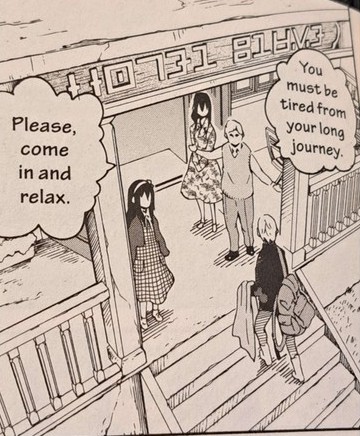 A related easter egg was found as I was trying to decipher the alphabet used in Kino’s world (the letters look similar enough to their English counterparts to decipher some of them, and some pieces are translated for the viewer’s understanding, which is also helpful). Aster’s family runs a hotel, which appears to be called Hotel Blume when the characters are translated. This is a homophone to “bloom,” which makes sense given Aster’s floral namesake. Interestingly, when viewed upside-down, the “Blume” looks remarkably similar to the word “Earth.”5 Considering that the series calls each new city that Kino later visits a “land,” and the series’ subheading The Beautiful World,” this detail emphasizes the difference between young Aster’s whole world being this town and the hotel that she is expected to inherit, and the beautiful world that they’ll explore later on as Kino, having grown into a life that makes them happy.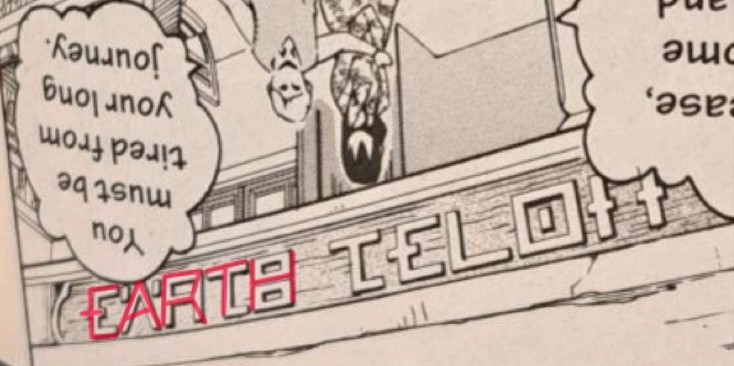
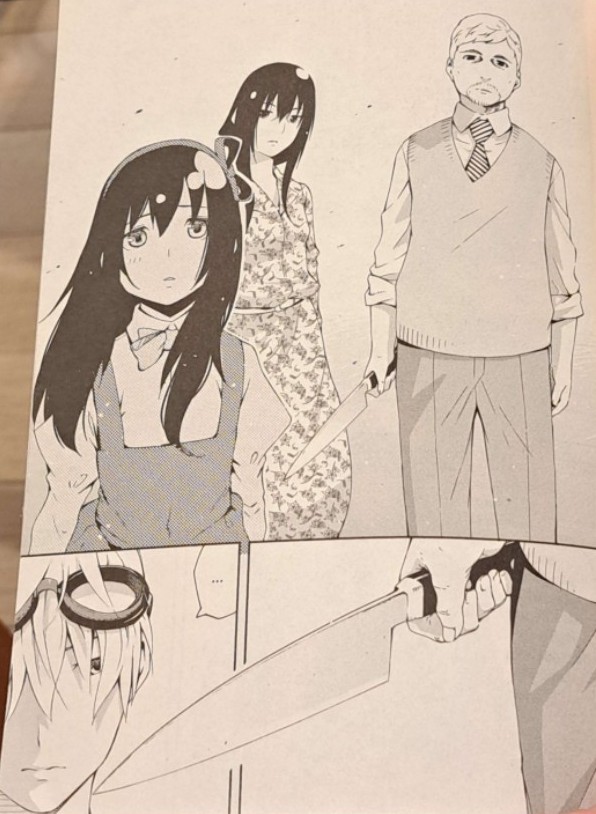 I’d also like to highlight the page near the end of Chapter 1 where Aster’s father is holding a kitchen knife, and it points at Old Kino’s throat. On the next page, he asks why the father has the knife - it’s explained that this is so that he can “dispose of” his defective child - and only moments after, Old Kino dies from jumping in front of the knife to save Aster. The page is a beautiful bit of visual foreshadowing, subtle but very clear in its meaning.
The Land of Adults
Kino’s Journey begins in The Land of Adults. We meet a young girl, referred to only as XXXXX (or Aster, as we deduced before), and a traveler, who introduces himself as Kino. The traveler is in search of a cheap hotel, and Aster’s family happens to own just the right kind of inn. Over the three days that Kino is there (he mentions that his rule is to never stay in one country for longer than three days), Kino and Aster talk and become friends. Kino finds out that Aster will soon be having The Operation,6 a surgery that removes the child from the brains of kids when they turn 12, transforming them instantly into perfect adults. Aster also shows confusion when Kino says that he doesn’t really have a job - he’s a traveler, but that’s fun, and Aster has learned that jobs aren’t supposed to be enjoyable - they’re a duty, passed on by the kid’s parents. She asks if Kino is a child, then, since he’s not an adult, and he says that he isn’t really either one - he’s just ‘Kino.’
He likes traveling, so he’s on a journey. What Aster really likes is singing, and he asks why she doesn’t become a singer. She says that she can’t, because she’s meant to take over the hotel, and she lies awake that night thinking about their conversation.
The next day, Aster tells her parents that she doesn’t want to get the Operation. It’s the day when she’s due for it, her 12th birthday, and also the day that Kino is leaving. Her parents are outraged, and start screaming at her in the street. Things escalate quickly, and her father attempts to kill her. Kino jumps in the way at the last second, leaving Aster to jump on Hermes and make a run for it. Aster takes on both Kino’s name, and his place as a traveler.7 The rest of the series takes place a few years later, with Kino being more experienced as a traveler.
Last Day
At the outset of Kino, Keiichi Sigsawa uses a near-death experience followed by a change in setting to represent rebirth. He also writes a compelling trans allegory, supported by the reveal that Kino is canonically nonbinary in Volume 7.8 Central to this subplot is the phrase “Last Day.”9
Last Day is the final day in the countdown to The Operation. This is essentially a form of death, and given Aster’s general personality and reservations10 about taking over Hotel Blume, it feels especially threatening. Her autonomy is being seriously violated, and as we learn later, this is considered normal in the Land of Adults. Children aren’t considered to be full persons with inherent rights, but rather the property of their parents, created for the sole purpose of carrying on their work. As the city official says, Children are invariably the property of their parents, and parents, naturally, have every right to dispose of a failure.
In the eyes of her father, Aster is simply a dud.
11
And yet, despite all of the horror associated with Last Day, it is the catalyst for the best thing in Kino’s life - it is the day when they become a traveler. They’re left free to do the one thing they want to the most - continuing their journey is repeatedly referenced as the thing they simply can’t let go of. It’s quite literally the first thing that’s addressed in the manga, as Kino and Hermes discuss in the Prologue of Volume 1 why they’re on the journey, and why Kino doesn’t want to end it.12 This love and devotion to traveling is the reason why it hits so hard in Volume 5 when they break the previously iron-clad three-day-visit rule for the first time.13
Last Day is, in every sense of the word, a rebirth. Aster dies in a peaceful, voluntary, figurative sense, as opposed to the cold and quite literally invasive sense that The Operation would have imposed on her. They are then reborn as Kino. Aster as an identity dies, but the child in Kino’s mind that she represents is left alive - we see this often in the prologue and epilogue sequences, where Kino is happy and carefree.14 Even Kino’s new name is a sort of magical moment. After a frantic escape, Aster and Hermes crash in a field of flowers. This is the first time that they properly have the chance to speak to one another, and Hermes asks the name of the one who let them crash so roughly. Aster is still shell-shocked from seeing her friend jump in front of a knife for her, and simply murmurs “Kino.” When asked again, she could have said, “Oh, no, my name is Aster.” Instead, time slows down. Panels flash through Aster’s memories and thoughts, and after a moment of hesitation, she smiles. Kino. Yes, it’s Kino, Hermes.
15 No longer Aster, Kino has found themself a new name and a new life.
More Rebirth
During a flashback in Volume 7, Kino is officially revealed to be nonbinary (a trait that had been hinted at before, but not confirmed). This lends support to a reading of their origin story - and perhaps rebirth stories in general - as a trans allegory. Kino, in a sense, literally has a deadname in their childhood identity as Aster. The figurative death of that earlier form, to be recreated with a name, an identity, and a lifestyle that is significantly more mentally healthy for Kino, seems to resonate very strongly with trans experiences.
Hermes also experiences a rebirth, in a smaller yet perhaps more literal sense. Hermes is broken at the beginning of the story, non-functional. He appears to the reader at first as a normal motorcycle, not a sentient motorrad with emotions. (It should be noted, it is made very clear that he does indeed have emotions, sensations, and desires. An easy example is the aforementioned scene after Aster’s escape when he exhibits distress at being knocked over roughly.)16 Old Kino offered to buy Hermes, seeing his inherent worth, but his previous owner called him "garbage” and gave him away for free. Hermes is given a literal new life when Old Kino repairs him, and a figurative new life when Kino makes him their traveling companion.
Sakura and the Land of Kindness
In Volume 5, Kino and Hermes visit a land that has a reputation for being absolutely terrible to travelers. Supposedly, ‘kids will throw rocks at you,’ ‘shops close at the sight of travelers,’
and officials make you wait a whole day to enter.
17 They’re surprised at their arrival to find that the town is extremely excited to have visitors, and they’re given the royal treatment from that point on.
In this town, we meet a young girl named Sakura, who’s clearly meant to parallel Aster. The girl is three days away from turning 12, the exact same age that Aster was when Old Kino first came to town; she shares a flower name and is also bullied by other kids with mean nicknames, and her family also runs a hotel.18 However, Sakura loves the family business, and assigns herself as Kino and Hermes’ tour guide of the town during their stay. She shows them a beautiful view, and takes them to a town wedding, where Kino catches one of a few pouches containing a seed (this is a similar practice to throwing the bouquet), and gives it to Sakura.19 That evening, they eat dinner together, and Sakura asks Kino about their journey, and if they ever want to end it. Kino explains that they travel because it makes them happy. Sakura’s family is kind and gentle to her, and even encourages her on the last night to go traveling and see the world like Kino. Sakura declines, however, since she’s happiest where she is; her family is supportive of this as well. The next morning, Kino asks the town guards if they can stay one more day. Hermes especially finds this shocking, since the three-day rule20 has never been broken before. Unfortunately, the town guard says no, since they originally only requested three days, so Kino and Hermes hit the road again. Alongside their usual baggage is a pair of small gift boxes from Sakura and her family, with food for the trip.
Before dawn the next morning, Kino wakes, feeling the ground shaking. Moments later, they see a violent volcanic eruption from a neighboring mountain, pouring down the side and onto the town they’d just left.21 While Kino is safe at their high camping site, there is nothing they can do but watch in horror. Trying to stay calm, they decide to eat breakfast and leave, so they open the second gift box. It contains food, but also a note from Sakura’s mother.
The note explains that the town scholars were aware of the impending eruption, and the townspeople had chosen to stay in their homeland. However, they were met with the realization that the only people who would remember them would be travelers who had passed through - and the vicious reputation of that town had once been true, so no travelers ever came anymore. Kino was the exception, and Sakura’s mother thanks them for that. She adds that everyone aged 12 and above was aware of the eruption, but Sakura’s 12th birthday was the day of the eruption. Her mother and father had planned to force her to leave with Kino, but when she said that it was her dream to stay, they relented.
Deeper in the box is another note, along with a small pouch containing a seed from the wedding they’d attended. This is from Sakura, saying that there would be no point in her keeping the seed. The implication is clear - Sakura knew that her world was ending, and she was at peace with that reality. She was able to be a brilliant tour guide, if briefly, and that was all she’d ever wanted.
Sakura’s Rebirth
Sakura does not escape death. However, she does accept it, and, in a way, she and the rest of her townspeople live on. In the note from her parents, it’s explained that the townspeople knew that the only way they would be remembered is by travelers, but since their reputation from earlier years had been so terrible, Kino and Hermes were the only ones to visit. In their minds alone, the townspeople - including Sakura - are kept alive in memories. The Land of Kindness can be considered a kind of phoenix story. In the beginning, the town is ruthlessly cruel to travelers, and that is how they are known across the world. Their life in the memories of others maintains that mean spirit long after it has faded. They literally burn, covered within moments in volcanic ash. And yet, in a way, they are reborn in Kino and Hermes’ memories, and in the tales that they may tell, in a much kinder light.
Kino’s Journey is full to the brim of stories with twisted, sometimes tragic endings. A Land of only cold, rational, adults whose only concern is passing on their work, is not a utopia. It may take the impending eruption of a volcano to humble people enough to treat outsiders kindly. And yet, there’s hope amongst the anguish. Death, whether literal or figurative, is rarely ever the end. The death of Aster was not the death of the child in her mind, who would live on in the mind of Kino. Hermes’s broken parts did not kill his spirit. And the mean reputation of an entire city did not die with them, but it would be replaced with memories of true kindness. Death and rebirth are deeply intertwined, and the end may actually be the beginning.
[1] Defined in the book as “A two-wheeled vehicle. Refers only to vehicles that do not fly.”
[2] Keiichi Sigsawa, Kino’s Journey: The Beautiful World, English edition. (New York: Vertical Comics, 2017), Volume 1, Chapters 2-3.
[3] Sigsawa, Kino’s Journey, Volume 2, Chapters 1-2.
[4] Sigsawa, Kino’s Journey, Volume 1, Chapter 1.
[5] Sigsawa, Kino’s Journey, Volume 1, Chapter 1.
[6] Sigsawa, Kino’s Journey, Volume 1, Chapter 1.
[7] From this point on in this paper, “Kino” refers to the main character of the story, previously XXXXX/Aster, and “Old Kino” will be used to refer to the original traveler who came to town.
[8] Sigsawa, Kino’s Journey, Volume 7, Epilogue Pt. 1.
[9] Sigsawa, Kino’s Journey, Volume 1, Chapter 1.
[10] Hehe, hotel, reservations. Ba-dum tsss.
[11] Sigsawa, Kino’s Journey, Volume 1, Chapter 1.
[12] Sigsawa, Kino’s Journey, Volume 1, Prologue.
[13] Sigsawa, Kino’s Journey, Volume 5, Chapter 3.
[14] Sigsawa, Kino’s Journey, Volume 2, Prologue; Volume 3, Bonus; and Volume 4, Bonus, are all good examples.
[15] Sigsawa, Kino’s Journey, Volume 1, Chapter 1.
[16] Sigsawa, Kino’s Journey, Volume 1, Chapter 1.
[17] Sigsawa, Kino’s Journey, Volume 5, Chapter 1.
[18] Sigsawa, Kino’s Journey, Volume 5, Chapter 1.
[20] Sigsawa, Kino’s Journey, Volume 5, Chapter 2-3.
[21] Sigsawa, Kino’s Journey, Volume 1, Chapter 1.
[22] Sigsawa, Kino’s Journey, Volume 5, Chapter 3.